Categories
Human Behavior

Why are white people in the American South called “rednecks”? A scientific explanation from genes to pigments

This article has been updated and moved. Click here to go to the latest version:
https://www.aclerly.com/the-comprehensive-guide-to-human-biological-variation-genetics-traits-and-societal-implications/

The Origin and Genetic Background of Rednecks

The term “redneck” originally originated from the farmers in the southern United States. These people worked outdoors for long periods of time, and their neck skin was exposed to the sun all year round, showing a distinct red color. However, this red color is not only the result of sun exposure, but is also closely related to genetic characteristics.

Skin color is primarily controlled by the MC1R gene, located on chromosome 16, which regulates melanin synthesis. Melanin is divided into two types: eumelanin and pheomelanin. Eumelanin is dark in color and effectively absorbs UV rays, protecting the skin from damage; pheomelanin is reddish-yellow and less effective at absorbing UV rays.

In some Caucasian individuals, a mutation in the MC1R gene results in decreased eumelanin production and increased pheomelanin production. This genetic trait causes the skin to appear red rather than dark brown when exposed to sunlight, making these individuals more susceptible to sunburn and even skin cancer. This gene mutation is more common in populations of northern and western Europe, including those of Germanic and Celtic descent.

Pigments and the distribution of colors in nature

The colors of organisms throughout nature, not just humans, are largely determined by pigments. The red, yellow, brown, and black colors found on animals, as well as the green of plants, are primarily derived from the light-absorbing properties of specific chemicals. These pigments absorb specific wavelengths of light, resulting in corresponding colors.

It’s worth noting that true blue pigments are extremely rare in nature. Many blue animals and plants don’t actually produce their color from pigments, but rather through structural color. Structural color relies on the interference and reflection of light through microscopic structures, reflecting only specific wavelengths, causing the human eye to perceive blue or other colors.

Principles and Examples of Structural Color
Take the Blue Morpho butterfly, for example. A close examination of its wings reveals virtually no pigment. The blue color is the result of light reflection from the wing’s surface microstructure. When different wavelengths of light interfere with each other, all light except the blue is canceled out, leaving the eye with only the blue color. If the wings are immersed in water, the refraction and interference effects of the structure are altered, and the blue color is reduced or even eliminated.

The example of peacock feathers also illustrates the role of structural color. While the feather itself is dark brown, the bright blue and green colors in the pattern are reflections produced by the optical structure, rather than by direct pigmentation. In contrast, colors like red, yellow, and brown are mostly chemical, resulting from direct absorption of light by pigment molecules.

Why is blue pigment scarce?

Chemical colors rely on a unique system of conjugated double bonds in a molecule’s structure . This structure consists of alternating single and double bonds, typically formed by carbon atoms. If there are enough conjugated double bonds, the molecule will absorb specific wavelengths of visible light, thus producing a color.

The scarcity of blue pigments in nature stems primarily from the complexity of their molecular structure. The conjugated double bonds required for blue are typically longer and less stable than those of other colors, making them difficult to form naturally in living organisms. Even modern synthetic blue pigments require high temperatures, high pressures, or specialized protective conditions to maintain their stability. Phthalocyanine blue, for example, is a prime example of a blue pigment that absorbs long-wavelength light through its complex molecular structure.

MC1R gene and skin protection mechanism

Regarding human skin pigmentation, mutations in the MC1R gene lead to a decrease in eumelanin and an increase in pheomelanin, making the skin more prone to redness. While pheomelanin provides limited protection, it’s insufficient to completely block UV rays. Long-term sun exposure can lead to sunburn and DNA damage, which explains the increased risk of skin cancer in “rednecks.”

This genetic phenomenon is not only a cultural marker but also provides a biological perspective on how humans adapt to different environments. Northern and Western Europeans have lighter skin because they experience less sunlight and therefore require less melanin. The diversity of the MC1R gene reflects human evolutionary adaptation to these diverse environments.

The laws of color evolution in nature

Colors in nature are not only limited by chemical pigments but also influenced by optical structure. Rare colors like blue and green are often formed through structural color, while warm colors like red and yellow are more easily achieved through chemical pigments. This pattern determines visual signals, camouflage strategies, and biological communication within ecosystems. For example, the courtship behavior of blue birds and insects often relies on the optical properties of structural color rather than pigment accumulation.

Furthermore, the emergence of structural color is often accompanied by complex biological behaviors and ecological selection pressures, such as predator avoidance, mate selection, or group recognition. This means that organisms rely not only on chemical pigments to optimize visual signals but also use physical structures to cleverly manipulate light. Some marine organisms, such as tropical fish, also use tiny scale structures to manipulate light reflection and achieve color changes. This mechanism also plays an important role in camouflage and hunting.

Additional Scientific Perspectives: Human Adaptation and Ecological Connections
Beyond pigmentation and optical structure, changes in skin color also reflect the long-term interaction between humans and their environment. Research shows that lighter-skinned people are more likely to synthesize vitamin D, so the evolution of lighter skin in less sunny regions is an adaptation. The emergence of red skin, on the other hand, is a physiological response to intense sunlight. The risks associated with this adaptation also prompted humans to develop cultural countermeasures such as sunscreen, clothing, and shelter.

The distribution of colors in nature also reminds scientists that the appearance of organisms is not just a random phenomenon, but the result of evolutionary pressures, genetic regulation, and the laws of physics. From butterfly wings and bird feathers to human skin color, these visual features have evolved to convey information, provide reproductive advantages, and serve as survival strategies.

Conclusion and Implications

From rednecks to blue birds, the essence of color is a complex combination of genes, molecular structure, and optical principles. Variations in the MC1R gene reveal how human skin adapts to different environments, while the rare blue color found in nature reveals the complementary relationship between chemical pigments and structural color. This not only provides a scientific explanation for biological coloration but also highlights the profound connection between genetic diversity and ecological adaptation.

Modern science has proven that the red color of red necks is not simply a result of tanning, but rather a direct manifestation of a biological phenomenon. Similarly, the rarity and complexity of blue in nature suggests that understanding the laws of nature requires a balanced understanding of chemistry, physics, and biology. Future research into the interaction between pigments and structural color will contribute to materials science, the development of artificial pigments, and the study of biological evolution.

This article has been updated and moved. Click here to go to the latest version:
https://www.aclerly.com/the-comprehensive-guide-to-human-biological-variation-genetics-traits-and-societal-implications/
Categories
Human Behavior

The evolution of humanity: the story of Homo sapiens and his relatives

This article has been updated and moved. Click here to go to the latest version:
https://www.aclerly.com/the-grand-tapestry-of-human-evolution-traces-timeline-hair-and-future-adaptations/

Human diversity in the ancient world

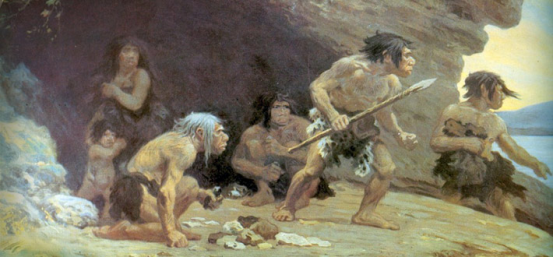
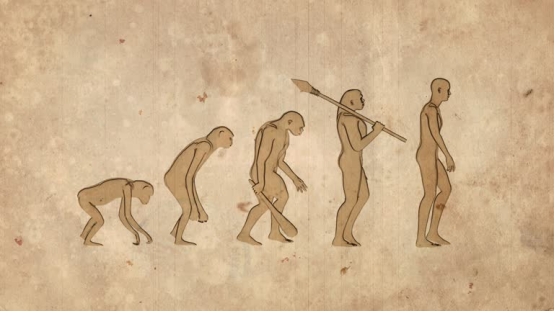
If we go back 50,000 years, modern humans weren’t the only human species on Earth. At that time, there were approximately four or five species of humans, including a dwarf known as “Homo floresiensis,” often referred to as the Hobbit. These species shared certain similarities with modern humans in cognitive abilities and the development of civilization. Homo sapiens is the sole surviving representative of the primate family Hominidae, while many past branches and relatives have gradually disappeared or have interbred with Homo sapiens.

Definition and origin of the genus Homo

From a biological perspective, humans belong to the genus Homo, a primate family in the family Hominidae. Historically, the genus Homo once comprised a diverse array of species, of which modern humans are the sole survivors. Prior to the emergence of Homo sapiens, the genus Homo underwent a long evolutionary process, forming multiple branches, each of which developed unique adaptive strategies for its environment.

Australopithecus and the Beginning of Bipedalism

Around four million years ago, Australopithecus began to diverge in southern and eastern Africa, gradually moving away from arboreal life and towards upright walking. Australopithecus is a key starting point in human evolution, with its skeletal structure showing adaptations from arboreal to terrestrial habitats.

Around 2.8 million years ago, a subset of Australopithecus evolved into Homo habilis. Homo habilis’s brain capacity significantly increased, its prefrontal lobe prominently developed, and its ability to systematically use tools developed. This phase marked the formation of the genus Homo and the beginning of the Paleolithic Age.

The craftsman stage and the use of complex tools

Around 1.9 million years ago, a subset of Homo habilis evolved into an early variant of Homo erectus, characterized by longer, more flexible limbs and the ability to make and use more complex tools. Homo erectus fossils have been found primarily in East Africa, where numerous stone tools and tool marks have been unearthed. Some scholars consider Homo erectus to be a transitional stage between Homo habilis and Homo erectus, rather than a distinct species.

Homo erectus: The beginning of global dispersal

The emergence of Homo erectus around 1.8 million years ago marked the beginning of humankind’s spread out of Africa and into Eurasia. Homo erectus fossils are found across Africa, Europe, and Asia, demonstrating their ability to adapt to diverse environments. Homo erectus also began to use fire, significantly increasing productivity and developing more complex social structures.

During this stage, humans produced multiple branches, laying the foundation for the subsequent emergence of Homo sapiens.

Homo heidelbergensis: the direct ancestor of modern humans

Around 650,000 years ago, Homo heidelbergensis emerged, considered the professional ancestor of modern humans. Homo heidelbergensis had a more complex society, and its remains show traces of burials and symbolic behavior, suggesting enhanced cultural and cognitive abilities.

The emergence of Homo sapiens and the leap in cognitive ability

Around 250,000 years ago, Homo sapiens emerged, developing language and highly complex cognitive structures. They gradually spread to the Americas and Oceania, interacting with their environment and other human species. 200,000 years ago, Homo sapiens were physiologically indistinguishable from modern humans and can be considered the initial configuration of “modern human hardware.” The development of modern civilization is equivalent to the continuous accumulation of “software” on this hardware.

Branching evolution and coexistence of close relatives

After Homo erectus and Homo heidelbergensis, the genus Homo gave rise to several branches. Homo heidelbergensis gave rise to Neanderthals (Homo neanderthalensis), who competed with Homo sapiens and eventually became partially extinct. Extinction between species is often accompanied by competition for resources, but also by genetic exchange:

European genes contain about 2% Neanderthal genetic information.

Among the indigenous peoples of East Asia, South Asia and Oceania, Denisovan genes account for less than 6%.

The persistence of these genes has potential implications for physiological adaptations in modern humans, such as the immune system and skin, suggesting that closely related species not only existed historically but also integrated into the modern human gene pool in microscopic ways.

Homo floresiensis: The discovery of a small human

Homo floresiensis, discovered on the Indonesian island of Flores, stood only about one meter tall and had a brain capacity only one-third that of Homo sapiens, equivalent to that of a chimpanzee. However, they displayed cognitive abilities comparable to those of their contemporaries, particularly well-developed prefrontal lobes, enabling them to make tools and perform complex activities. This discovery emphasizes that cognitive ability is not solely dependent on brain size but is closely linked to neural structure and behavioral patterns. Homo floresiensis survived long-term in an island environment through group cooperation, hunting, and toolmaking, providing a valuable case study for the study of small-scale social systems.

Human cognition and cultural accumulation

A key reason Homo sapiens was able to rapidly surpass other species is cultural accumulation. Language, symbolic communication, social cooperation, and tool innovation enabled the transmission of knowledge across generations. Early Homo sapiens already possessed the ability to “store” experience and apply it to daily life. This cultural storage mechanism was key to the accelerated development of human civilization.

Furthermore, humans differ significantly from other primates in cognition. While chimpanzees, elephants, or whales may be superior to humans in certain sensory abilities, Homo sapiens was able to transform these abilities into tools for adapting to the environment and creating culture through abstract thinking, language, and technology, thereby establishing an advantage on Earth.

Genetic links between Homo sapiens and their close relatives

Genetic studies reveal a complex history of interbreeding between different human lineages. By analyzing the genes of Neanderthals and Denisovans, scientists have discovered that modern humans benefited from these genes as they adapted to new environments. For example, certain immune genes may have helped Homo sapiens defend against pathogens in European or Asian environments. This cross-species gene exchange demonstrates evolutionary flexibility and challenges the traditional view that a single species evolved independently.

Intelligence and the potential of civilization

Fossil and genetic research reveals that Homo sapiens possessed the fundamental building blocks of modern cognitive abilities as early as 200,000 years ago. The development of modern civilization relies more on accumulated knowledge, culture, and technology than on changes in physiological hardware. This explains why Homo sapiens was able to successfully survive in diverse environments and gradually become the sole human species on Earth.

The overall trend of human evolution

Originated in Africa : Australopithecus – Homo habilis – Homo ergaster – Homo erectus – Heidelberg man – Homo sapiens, forming a main line.

Cognitive improvement : As brain volume and prefrontal lobe develop, tool use, social structure, and cultural abilities gradually increase.

Global spread : Spread from Africa to Eurasia, America and Oceania, adapting to different ecological environments.

Branch extinction and gene retention : Branches such as Neanderthals, Denisovans and Flores people became extinct, but their genes were partially continued through hybridization.

Cultural accumulation accelerates civilization : innovations in language, symbols, and tools enable human knowledge to be transmitted rapidly across generations.

Summary and Enlightenment

Human evolution reveals a complex interplay of biodiversity, environmental adaptation, and cognitive abilities. While different species diverge in intelligence and culture, each exhibits unique adaptive strategies for its environment. The success of modern Homo sapiens is no accident; it is the result of millions of years of evolution, interspecific competition, and cultural accumulation. Understanding these evolutionary processes can better understand how humans have been able to survive independently on Earth and develop advanced civilizations. It also reminds us of the value of preserving biodiversity and preserving our culture.

This article has been updated and moved. Click here to go to the latest version:
https://www.aclerly.com/the-grand-tapestry-of-human-evolution-traces-timeline-hair-and-future-adaptations/
Categories
Human Behavior

The science behind the ratio of boys to girls at birth: Why are there more male babies?

This article has been updated and moved. Click here to go to the latest version:
https://www.aclerly.com/the-comprehensive-guide-to-human-biological-variation-genetics-traits-and-societal-implications/

Introduction: Is the ratio of males to females at birth really equal?

Human gender is determined by genetics, with males carrying XY chromosomes and females carrying XX. In junior high school biology class, we learned that the probability of male sperm carrying X or Y chromosomes is 50%, so theoretically the probability of male and female births should be equal. However, actual birth data shows that the number of male newborns continues to exceed that of females.

This seemingly minor deviation hides profound biological principles and evolutionary wisdom. Why is the proportion of male births higher? What does this mean for the health and stability of the human population? This article will comprehensively analyze this phenomenon through scientific data and theory.


Current status and statistics of the global sex ratio at birth

According to data from the World Health Organization and health departments of many countries, the global ratio of male to female newborns generally remains between 105 and 107 males to 100 females. This trend exists not only in modern society, but can also be traced back to ancient demographics.

For example, the sex ratio at birth in Japan, the United States, and many European countries shows a similar trend, which shows that the high proportion of male births is not accidental, but a stable phenomenon formed in the process of biological evolution.

It is also worth noting that with the changes of the times, environmental influences and improved medical standards, the sex ratio at birth will fluctuate slightly, but the overall rule that there are more males than females always exists.


Sex chromosome structure and genetic explanation for the prevalence of male newborns

The difference between men and women is rooted in the difference in the 23rd pair of chromosomes. Women have two X chromosomes, while men have X and Y.

The X chromosome carries about 1,000 coding genes involved in a wide range of physiological functions, including immune regulation, while the Y chromosome carries only more than 60 genes, mainly involved in male reproductive function.

This difference directly leads to the disadvantage of male individuals in terms of genetic stability. Women have a “backup” X chromosome, so even if certain genes on one chromosome mutate, the other can compensate; men lack this mechanism, and any harmful mutations are more likely to be directly manifested.

From an immunological perspective, the genes on the X chromosome are closely related to the function of the immune system, which makes males more susceptible to diseases due to immune deficiency during embryonic development and neonatal stages, leading to a higher mortality rate.


Boys’ respiratory system development delayed, leading to higher risk

In addition to the genetic level, boys also have certain disadvantages in their physiological structure. Studies have shown that boys’ lungs usually develop more slowly than girls’, and their respiratory function is less mature.

This makes male babies more susceptible to neonatal respiratory distress syndrome, especially if they do not receive timely modern medical support, the mortality rate can be as high as 50%. Although modern medical care has greatly improved this situation, it is still an important factor in the high mortality rate of male babies.

These physiological and genetic “disadvantages” require nature to balance the gender structure of the overall population by increasing the number of male births.


Sperm competition and fertilization mechanism: Y sperm have obvious advantages

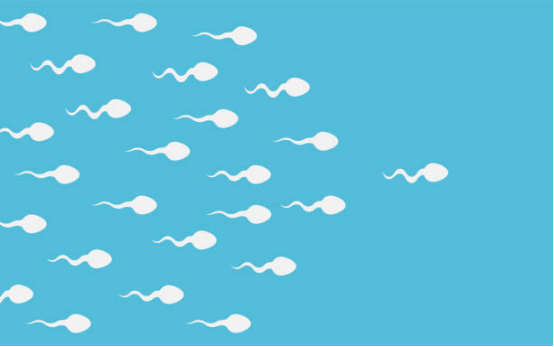
During fertilization, X sperm and Y sperm do not compete completely equally. Y sperm carries less genetic material, is smaller in size, and swims faster. These characteristics make it often reach the egg first in the competition, increasing the probability of forming a male embryo.

However, Y sperm have a shorter lifespan, while X sperm, although slower swimming, can survive longer in the female reproductive tract.

Based on this characteristic, scientists have proposed a theoretical strategy for regulating gender:

Couples planning to have a boy may have sex on the day of ovulation or after to take advantage of the fast-living but short-lived Y sperm for first fertilization.

Couples who plan to have a girl have sex a few days before ovulation, so that the Y sperm will die first, leaving the longer-lived X sperm to complete fertilization.

However, the success rate of this method is limited, at approximately 55% to 60%, and is affected by factors such as the uncertainty of ovulation time.


Effects of embryonic development speed and abortion rate on sex ratio

Successful fertilization does not mean embryo survival. The spontaneous abortion rate of early human embryos is extremely high, ranging from 30% to 50%, much higher than that of most mammals.

The sex of male embryos begins to differentiate around the sixth week, and their development speed is significantly accelerated after the relevant genes are activated, which helps to improve their early survival rate and reduce the risk of miscarriage.

However, because male embryos have a fast metabolism and a large demand for nutrition and oxygen, they are more likely to suffer miscarriage when the pregnancy environment is not good.

Therefore, environmental factors play a key role in regulating the sex ratio at birth.


How environmental pressures affect the sex ratio at birth

Among people who have been living in harsh environments for a long time, the proportion of female newborns tends to increase; conversely, among groups with rich nutrition and good living conditions, the proportion of male newborns is higher.

The evolutionary strategy behind this is: when resources are scarce, having more females helps ensure population reproduction and stability; when resources are abundant, an increase in the number of males promotes the selection of superior genes through competition.

This view also explains historical changes in sex ratios during wars and disasters, arguing that certain socio-environmental pressures actually participate in gender regulation in nature.


Science and society: the ethics and reality of regulating gender

With the development of biotechnology and assisted reproductive technology, humans’ ability to control gender selection has gradually increased.

However, this involves complex ethical and social issues, such as the disruption of gender balance and conflict of social values.

The progress of science should be based on respecting the laws of nature and maintaining social justice, and avoiding excessive intervention that may lead to adverse consequences.


Conclusion: The delicate balance of life is worth pondering

The subtle difference in the male-female birth ratio is the result of long-term evolution and environmental selection in nature, and reflects the wisdom of biodiversity and population stability.

Understanding these mechanisms not only helps us appreciate the wonders of life, but also prompts us to think about the boundaries of technology’s intervention in life.

What do you think of the naturally regulated sex ratio? Can technology change this balance in the future? Feel free to share your views and insights.

This article has been updated and moved. Click here to go to the latest version:
https://www.aclerly.com/the-comprehensive-guide-to-human-biological-variation-genetics-traits-and-societal-implications/