https://www.aclerly.com/scientific-frontiers-a-comprehensive-guide-to-de-extinction-and-ancient-chronology/
Every New Year, some people often refer to the Lunar New Year as the “Lunar New Year.” While this term is popular, it’s actually somewhat misleading. This article will delve into the controversy surrounding the Lunar New Year’s naming, the development of ancient calendars, and the differences between solar, lunar, and combined calendars, providing readers with a more comprehensive understanding of the scientific logic and historical background behind these calendars.
Why Lunar New Year shouldn’t be simply called “Lunar New Year”
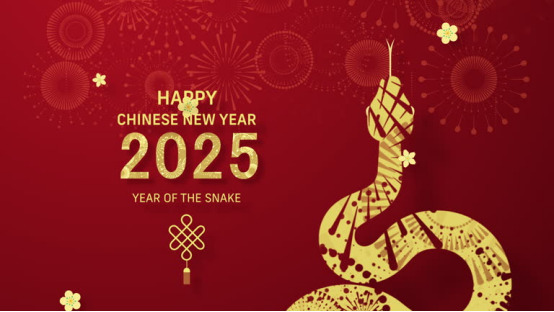
The Lunar Calendar is not based solely on lunar cycles, but rather incorporates the solar cycle, making it a combined solar and lunar calendar . Simply calling it the “Lunar New Year” overlooks its complexity and can easily lead to misunderstanding of its calculations.
The lunar calendar, originating during the reign of Emperor Wu of Han in China, was considered the most advanced calendar system in the world at the time. While East Asian countries like South Korea and Vietnam also adopted the lunar calendar, the formation of these calendars is closely tied to Chinese culture. Therefore, emphasizing the name “Chinese Lunar New Year” not only shows cultural respect but also helps avoid historical misinterpretations.
Three mainstream types of ancient calendars
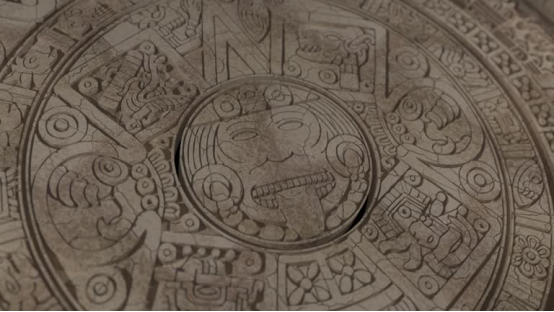
Throughout human history, calendars have been based on the movements of celestial bodies—primarily the sun and moon. Ancient civilizations developed three main types of calendars based on the natural environment and social needs: solar calendars, lunar calendars, and combined solar and lunar calendars .
Solar calendar : Based on the period of the Earth’s revolution around the sun, it emphasizes the stability of the seasons.
Lunar calendar : Based on the lunar phase cycle, it emphasizes observable changes every month and is often used to arrange religious festivals.
The solar-lunar calendar combines the cycles of the sun and moon to make the months and seasons relatively harmonious, suitable for agriculture and folk festival arrangements.
The origin and development of the solar calendar
The Julian calendar of ancient Rome
In 46 BC, Julius Caesar of the Roman Republic established the Julian calendar . He divided the year into 12 months, averaging about 365.25 days, and added a leap day every four years to ensure that the calendar roughly aligned with the seasons.
To highlight his status, Emperor Augustus later changed August to 31 days, which resulted in February being adjusted to 28 or 29 days to maintain a balanced year. The Julian calendar remained in use in Europe for over 1,500 years until it was revised by the Gregorian calendar in 1582.
The birth of the Gregorian calendar
As astronomy advanced, people discovered that the Earth’s orbital period is 365.2425 days, slightly shorter than the original 365.25 days. Pope Gregory XIII revised the leap year rule: years divisible by 100 but not by 400 would not have leap years, while years divisible by 400 would still have leap years. This adjustment, still in use today, ensures the calendar’s high accuracy.
Ancient Egyptian solar calendar
The ancient Egyptian solar calendar, which emerged earlier, had a relatively crude structure: a 365-day year, 12 30-day months, and a five-day festival at the end for worshipping the gods. After Egypt was annexed by Rome in 30 BC, the Julian calendar gradually replaced the Egyptian calendar.
Lunar calendar and Islamic calendar
the Islamic calendar in 622. Its months are based on the lunar cycle, with an average of about 29.5 days per month and a year of about 354 days.
Because the lunar calendar does not take into account the solar year, it advances the Gregorian calendar by about 11 days each year. This results in Islamic festivals such as Eid al-Fitr and Eid al-Adha occurring earlier each year. This calendar emphasizes the observability of the lunar phases, but has poor seasonal coordination.
The scientific logic of the lunar calendar
The lunar calendar is based on the waxing and waning of the moon. Each full moon to the next full moon is a lunar phase cycle, lasting approximately 29.53 days. However, due to the influence of the Earth’s revolution, the same lunar phase cycle does not exactly equal the duration of one lunar revolution (27.32 days). This is why the lunar calendar year does not coincide with the solar year.
Solar and lunar calendars: Lunar and Jewish calendars
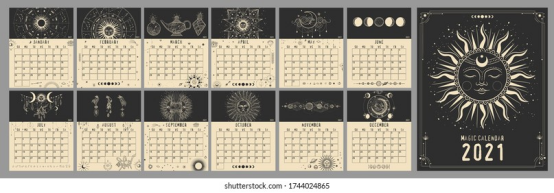
Chinese Lunar Calendar
The lunar calendar uses the lunar phases and solar cycles to adjust the length of the year through the intercalary month mechanism . A leap month is inserted every two to three years to bring the lunar year closer to 365 days, ensuring that the solar terms and seasons are synchronized.
Intercalary months are inserted according to the 24 solar terms : if a month does not have a solar term, it becomes a leap month. This is the case with the intercalary February in 2023. This mechanism allows the lunar calendar to align with the Gregorian calendar with high precision while preserving the traditional characteristics of the moon phases and solar terms.
Jewish calendar
The Jewish calendar is also a solar-lunar calendar, based on the lunar cycle and adjusted by intercalary months. Its rule is a 19-year cycle, with an intercalary month added in the 3rd, 6th, 8th, 11th, 14th, 17th, and 19th years, for a total of seven intercalary months, to roughly align the year with the solar year. The Jewish calendar begins in 3761 BC, and 2025 corresponds to the year 5785, the ninth year of the 19-year cycle.
The scientific wisdom behind the calendar
The ancients developed calendars based not only on astronomical observations but also on social, agricultural, and religious needs:
Solar calendar : emphasizes seasonal stability, which is conducive to agricultural production and festival arrangements.
Moon calendar : highlights the changes in the phases of the moon and is suitable for religious and cultural activities.
Solar-lunar calendar : takes into account both moon phases and seasons, suitable for synchronizing agriculture and folk festivals.
This combination of science and culture reflects the ancient civilization’s profound understanding of natural laws and social organization wisdom.
Calendar Evolution and Cultural Cognition
From the Julian calendar of ancient Rome to the Islamic, lunar, and Jewish calendars, calendars are not only tools for calculating time but also carriers of culture and history. A correct understanding of the Lunar New Year and its calendar context can help us more accurately understand the formation of holiday dates, cultural differences, and historical heritage.
In addition, by comparing the calendars of different civilizations, we can also see the innovative thinking of humans in observing celestial bodies, recording time and arranging social life: how to balance celestial cycles, seasonal changes and folk festivals has become an important manifestation of the wisdom of the ancients.
The common logic of the global calendar
Whether it was a solar calendar, a lunar calendar, or a combined solar and lunar calendar, the ancients’ starting point for developing calendars was to observe the motions of celestial bodies and incorporate them into practical life needs. Natural conditions such as sunlight, climate, and food availability directly influenced the design logic of the calendar.
This logic also explains why the Lunar New Year date varies each year, but always coordinates with the seasons and solar terms. In contrast, festivals on a purely lunar calendar tend to arrive earlier each year, while those on a solar calendar remain relatively stable.
Conclusion: Human Wisdom and Cultural Heritage from the Perspective of the Calendar
Solar, lunar, and combined solar and lunar calendars each have their own unique characteristics and applicable scenarios. The Lunar New Year calendar incorporates not only the phases of the moon but also the solar cycle, reflecting the ancients’ profound understanding of astronomy and natural laws. The evolution of calendars not only documents scientific progress but also reflects the close connection between cultural heritage and social life.
Understanding the relationship between the calendar and festivals will help modern people more accurately understand the differences in global festival times and how historical wisdom serves social organization and cultural life. It will also enable people to have a deeper respect for the scientific thinking of ancient civilizations.
https://www.aclerly.com/scientific-frontiers-a-comprehensive-guide-to-de-extinction-and-ancient-chronology/