https://www.aclerly.com/scientific-frontiers-a-comprehensive-guide-to-de-extinction-and-ancient-chronology/
The possibility of resurrecting extinct species
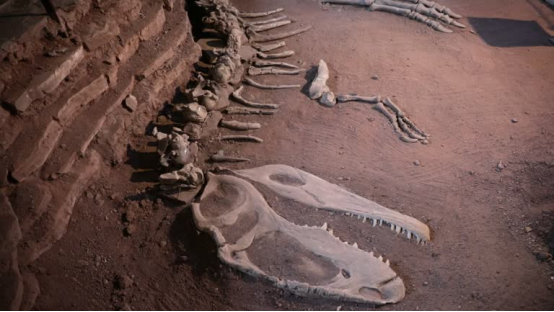
The number of species recorded throughout human history is enormous, yet approximately 99% of them are now extinct . With advances in genetic technology and ecological research, scientists are beginning to explore how to bring some extinct species back to Earth. The feasibility of this approach depends on the timing and cause of extinction, as well as the availability of existing biological material. Generally speaking, four main approaches are currently being explored: reverse domestication, iterative evolution, cloning, and gene editing.
Reverse domestication: Regaining ancestral traits in modern species
Back-breeding is a method of restoring the ancestral form and some living habits as much as possible by selecting individuals in modern species with genetic characteristics close to their ancestors for breeding.
Take the Tarpan, for example. This wild horse became extinct in 1879. Its characteristics include small ears, a short tail, and a medium-sized body. However, its genes persist in modern domestic horses. By selecting horses that resemble their ancestors, scientists have successfully developed breeds similar to the Tarpan, such as the German Hauptbrook.
It’s important to note that reverse domestication doesn’t completely restore the original species. While similar in appearance, the modern genome differs significantly from the original species, so the resulting “resurrected species” is only an approximation of the ancestor.
Iterative evolution: convergent recurrence under natural conditions
Iterative evolution refers to the phenomenon in which traits of extinct species reappear in new individuals under similar ecological conditions without human intervention.
A classic example is the Aldabra white-throated rail , native to the Aldabra Atoll in the Indian Ocean. 130,000 years ago, this bird’s wings gradually degenerated due to a lack of terrestrial predators on the island. However, the atoll was submerged, and the species became extinct. Years later, sea levels dropped, and terrestrial communities reappeared on the new island, including the white-throated rail with the same characteristics. These new individuals were almost identical to the extinct ancient bird, but they were not direct descendants. Instead, they were independent migrants that evolved through convergent evolution to form species with similar appearance and habits.
This phenomenon shows that environmental pressure and ecological conditions have a decisive influence on species morphology, and sometimes nature can “reconstruct” long-extinct characteristics.
Cloning technology: from cell nucleus to complete individual
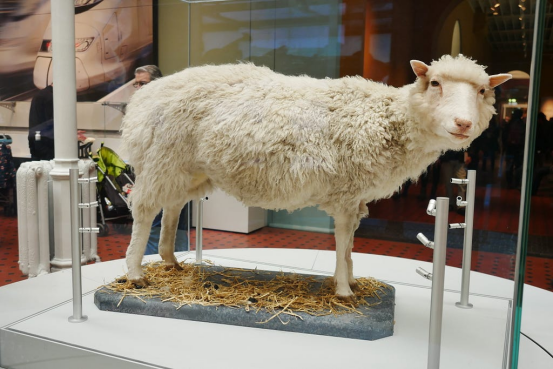
Cloning technology is the most intuitive method of resurrection, but the conditions are harsh and require well-preserved living cells . The process includes:
extracting cell nuclei from extinct species;
Obtain egg cells from closely related species and remove the egg nucleus;
implanting the nucleus of a cell from an extinct species into an egg cell;
Activate the division of fertilized eggs through artificial means;
The embryo is implanted into a surrogate mother to develop into an individual.
This method has had very few successful cases in practice. For example, scientists used tissue from the Pyrenean ibex, which became extinct in 2000, to conduct cloning experiments. Only one embryo out of hundreds was successfully born, but due to respiratory defects, it survived for only seven minutes. While the experiment failed to maintain the individual’s long-term survival, it demonstrated the theoretical feasibility of cloning technology and provided a foundation for future species resurrection.
Gene editing: directly modifying closely related species
Gene editing technology allows scientists to modify the genome directly at the DNA level, such as adding, deleting, or replacing specific sequences. The advantage of this method is that it can be manipulated by extracting DNA even without living cells, but two conditions must be met:
The extinction time is relatively recent, and DNA can still be extracted;
There are closely related species with highly similar genes that serve as carriers.
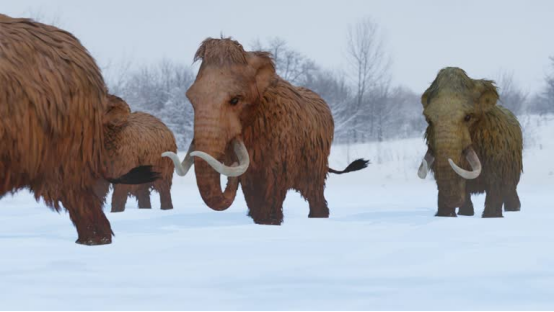
The woolly mammoth (Mammuthus primigenius) is an ideal candidate for this approach. Mammoths became extinct approximately 10,000 years ago, and their DNA is well-preserved in the Arctic permafrost. Asian elephants share 99.6% genetic similarity with mammoths . In theory, gene editing could be used to modify Asian elephant sperm or eggs, replacing some or all of their DNA with mammoth genes, thereby creating new individuals resembling mammoths. Research teams are currently testing this approach in the laboratory and are nearing success.
Ecological considerations for resurrecting species
Resurrecting species isn’t just about “restoring history.” From an ecological perspective, resurrected species must be able to find a suitable habitat within existing ecosystems. For example, the woolly mammoth’s native habitat was the Arctic wilderness during the Ice Age. If the environment isn’t suitable, resurrected individuals might only survive in zoos or become extinct again due to their inability to adapt to natural conditions.
Therefore, the main goals of resuscitation should include:
Ecosystem stability : increasing species diversity and filling ecological gaps left by extinct species;
Species adaptability : ensuring that resurrected individuals can survive, reproduce, and interact with their environment;
Scientific and conservation value : Provides reference for species protection, ecological restoration and scientific research.
Whether the resurrected species is exactly the same as before extinction is not the key; environmental adaptability and ecological contribution are the core values.
Method comparison and limitations
| method | Requirements | feasibility | limitation |
| Reverse domestication | Existing offspring species, appearance or traits optional | high | Unable to fully restore the genome |
| Iterative Evolution | Reproducible natural environment | middle | Unable to be controlled by humans, long time |
| clone | Preserving living cells and surrogate mothers | Low | Low survival rate and high risk of genetic defects |
| gene editing | Extinction time is recent, DNA is complete, and closely related species are available | high | The technology is complex, and ethical and ecological risks need to be assessed |
These methods each have their own advantages and limitations. Scientists usually choose the most appropriate resurrection plan based on species characteristics, causes of extinction and ecological environment.
Scientific and ethical thinking
Resurrection technology raises a series of scientific and ethical issues. In addition to technical feasibility, we also need to consider:
Ecological impact : Will resurrecting species disrupt the existing ecological balance?
Ethical controversy : Do humans have the right to intervene in natural history and resurrect extinct species?
Resource investment : Is resurrecting species more valuable than protecting existing endangered species?
These issues remind scientific researchers and the public that they need to weigh the feasibility and significance of resurrection plans from the perspectives of science, ethics, and ecology.
https://www.aclerly.com/scientific-frontiers-a-comprehensive-guide-to-de-extinction-and-ancient-chronology/