https://www.aclerly.com/the-grand-tapestry-of-human-evolution-traces-timeline-hair-and-future-adaptations/
Human diversity in the ancient world
If we go back 50,000 years, modern humans weren’t the only human species on Earth. At that time, there were approximately four or five species of humans, including a dwarf known as “Homo floresiensis,” often referred to as the Hobbit. These species shared certain similarities with modern humans in cognitive abilities and the development of civilization. Homo sapiens is the sole surviving representative of the primate family Hominidae, while many past branches and relatives have gradually disappeared or have interbred with Homo sapiens.
Definition and origin of the genus Homo
From a biological perspective, humans belong to the genus Homo, a primate family in the family Hominidae. Historically, the genus Homo once comprised a diverse array of species, of which modern humans are the sole survivors. Prior to the emergence of Homo sapiens, the genus Homo underwent a long evolutionary process, forming multiple branches, each of which developed unique adaptive strategies for its environment.
Australopithecus and the Beginning of Bipedalism
Around four million years ago, Australopithecus began to diverge in southern and eastern Africa, gradually moving away from arboreal life and towards upright walking. Australopithecus is a key starting point in human evolution, with its skeletal structure showing adaptations from arboreal to terrestrial habitats.
Around 2.8 million years ago, a subset of Australopithecus evolved into Homo habilis. Homo habilis’s brain capacity significantly increased, its prefrontal lobe prominently developed, and its ability to systematically use tools developed. This phase marked the formation of the genus Homo and the beginning of the Paleolithic Age.
The craftsman stage and the use of complex tools
Around 1.9 million years ago, a subset of Homo habilis evolved into an early variant of Homo erectus, characterized by longer, more flexible limbs and the ability to make and use more complex tools. Homo erectus fossils have been found primarily in East Africa, where numerous stone tools and tool marks have been unearthed. Some scholars consider Homo erectus to be a transitional stage between Homo habilis and Homo erectus, rather than a distinct species.
Homo erectus: The beginning of global dispersal
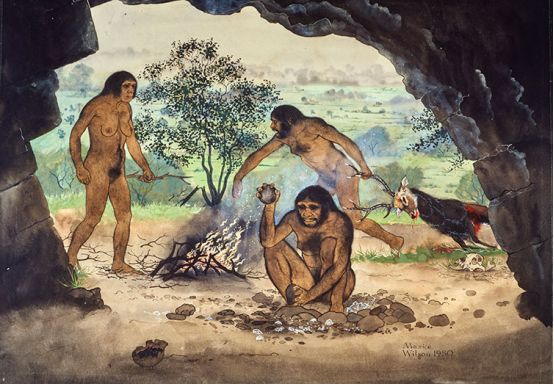
The emergence of Homo erectus around 1.8 million years ago marked the beginning of humankind’s spread out of Africa and into Eurasia. Homo erectus fossils are found across Africa, Europe, and Asia, demonstrating their ability to adapt to diverse environments. Homo erectus also began to use fire, significantly increasing productivity and developing more complex social structures.
During this stage, humans produced multiple branches, laying the foundation for the subsequent emergence of Homo sapiens.
Homo heidelbergensis: the direct ancestor of modern humans
Around 650,000 years ago, Homo heidelbergensis emerged, considered the professional ancestor of modern humans. Homo heidelbergensis had a more complex society, and its remains show traces of burials and symbolic behavior, suggesting enhanced cultural and cognitive abilities.
The emergence of Homo sapiens and the leap in cognitive ability
Around 250,000 years ago, Homo sapiens emerged, developing language and highly complex cognitive structures. They gradually spread to the Americas and Oceania, interacting with their environment and other human species. 200,000 years ago, Homo sapiens were physiologically indistinguishable from modern humans and can be considered the initial configuration of “modern human hardware.” The development of modern civilization is equivalent to the continuous accumulation of “software” on this hardware.
Branching evolution and coexistence of close relatives
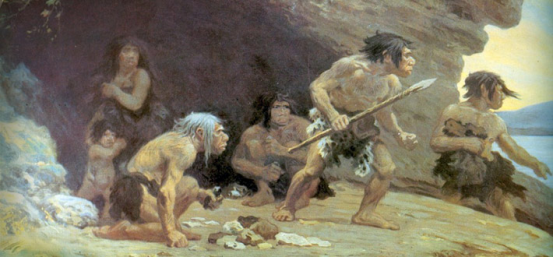
After Homo erectus and Homo heidelbergensis, the genus Homo gave rise to several branches. Homo heidelbergensis gave rise to Neanderthals (Homo neanderthalensis), who competed with Homo sapiens and eventually became partially extinct. Extinction between species is often accompanied by competition for resources, but also by genetic exchange:
European genes contain about 2% Neanderthal genetic information.
Among the indigenous peoples of East Asia, South Asia and Oceania, Denisovan genes account for less than 6%.
The persistence of these genes has potential implications for physiological adaptations in modern humans, such as the immune system and skin, suggesting that closely related species not only existed historically but also integrated into the modern human gene pool in microscopic ways.
Homo floresiensis: The discovery of a small human
Homo floresiensis, discovered on the Indonesian island of Flores, stood only about one meter tall and had a brain capacity only one-third that of Homo sapiens, equivalent to that of a chimpanzee. However, they displayed cognitive abilities comparable to those of their contemporaries, particularly well-developed prefrontal lobes, enabling them to make tools and perform complex activities. This discovery emphasizes that cognitive ability is not solely dependent on brain size but is closely linked to neural structure and behavioral patterns. Homo floresiensis survived long-term in an island environment through group cooperation, hunting, and toolmaking, providing a valuable case study for the study of small-scale social systems.
Human cognition and cultural accumulation
A key reason Homo sapiens was able to rapidly surpass other species is cultural accumulation. Language, symbolic communication, social cooperation, and tool innovation enabled the transmission of knowledge across generations. Early Homo sapiens already possessed the ability to “store” experience and apply it to daily life. This cultural storage mechanism was key to the accelerated development of human civilization.
Furthermore, humans differ significantly from other primates in cognition. While chimpanzees, elephants, or whales may be superior to humans in certain sensory abilities, Homo sapiens was able to transform these abilities into tools for adapting to the environment and creating culture through abstract thinking, language, and technology, thereby establishing an advantage on Earth.
Genetic links between Homo sapiens and their close relatives
Genetic studies reveal a complex history of interbreeding between different human lineages. By analyzing the genes of Neanderthals and Denisovans, scientists have discovered that modern humans benefited from these genes as they adapted to new environments. For example, certain immune genes may have helped Homo sapiens defend against pathogens in European or Asian environments. This cross-species gene exchange demonstrates evolutionary flexibility and challenges the traditional view that a single species evolved independently.
Intelligence and the potential of civilization
Fossil and genetic research reveals that Homo sapiens possessed the fundamental building blocks of modern cognitive abilities as early as 200,000 years ago. The development of modern civilization relies more on accumulated knowledge, culture, and technology than on changes in physiological hardware. This explains why Homo sapiens was able to successfully survive in diverse environments and gradually become the sole human species on Earth.
The overall trend of human evolution
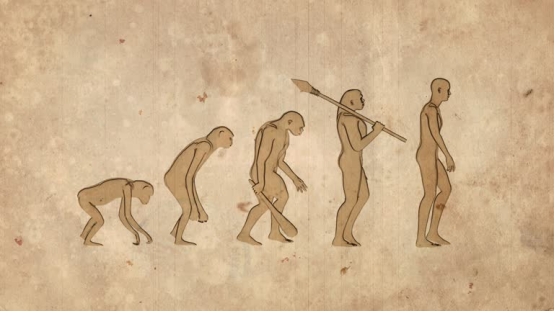
Originated in Africa : Australopithecus – Homo habilis – Homo ergaster – Homo erectus – Heidelberg man – Homo sapiens, forming a main line.
Cognitive improvement : As brain volume and prefrontal lobe develop, tool use, social structure, and cultural abilities gradually increase.
Global spread : Spread from Africa to Eurasia, America and Oceania, adapting to different ecological environments.
Branch extinction and gene retention : Branches such as Neanderthals, Denisovans and Flores people became extinct, but their genes were partially continued through hybridization.
Cultural accumulation accelerates civilization : innovations in language, symbols, and tools enable human knowledge to be transmitted rapidly across generations.
Summary and Enlightenment
Human evolution reveals a complex interplay of biodiversity, environmental adaptation, and cognitive abilities. While different species diverge in intelligence and culture, each exhibits unique adaptive strategies for its environment. The success of modern Homo sapiens is no accident; it is the result of millions of years of evolution, interspecific competition, and cultural accumulation. Understanding these evolutionary processes can better understand how humans have been able to survive independently on Earth and develop advanced civilizations. It also reminds us of the value of preserving biodiversity and preserving our culture.
https://www.aclerly.com/the-grand-tapestry-of-human-evolution-traces-timeline-hair-and-future-adaptations/