https://www.aclerly.com/the-born-criminal-theory-a-historical-analysis-of-phrenology-and-bias/
Theory of Born Criminal in 19th Century Europe
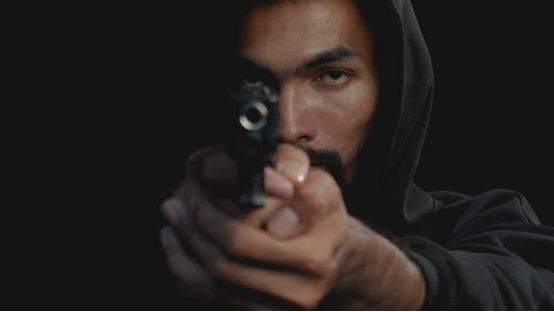
In 19th-century Europe, a popular way of thinking, which used facial and cranial features to judge a person’s personality and criminal tendencies, became known as Cesare Lombroso’s Criminal Anthropology . Its originator, Cesare Lombroso, is considered the “Father of Modern Criminology” in the history of criminology.
The core idea of the born criminal theory is that some criminals, especially serious criminals, are driven by nature to commit crimes. Their genes carry a so-called “savage tendency,” which manifests in primitive, violent behavior patterns. This view attempts to explain crime through biology, and its supposed scientific basis comes from a discipline called phrenology.
The origin and development of phrenology
Phrenology was founded by Franz Joseph Gall, a German neurologist in the early 19th century. While working in a mental hospital, Gall noticed similarities in the shapes of the heads of patients with mental illness. He hypothesized that personality, intelligence, and psychological traits might be linked to head shape. To test this theory, Gall began collecting skulls from various sources, including those of the mentally ill, criminals, and historical figures.
Through his research, he proposed the theory of brain compartmentalization, positing that different brain regions are independent and correspond to distinct personality traits. The more developed a particular brain region, the more pronounced the corresponding personality trait is in the individual, and this trait can influence the appearance of the skull. For example, a more developed region can make the skull more prominent, resulting in measurable features. Gall also created a model of the head compartmentalization, labeling the personality traits associated with each region, and designed an instrument to measure skull shape for direct qualitative analysis.
The combination of born criminal theory and phrenology
Lombroso combined phrenology with criminology to develop the concept of the “born criminal.” He identified a series of facial and head features that he claimed were associated with a high propensity to commit crimes, including:
Facial asymmetry
groin nose
big chin
high cheekbones
Flat forehead
Raised brow bone
Big Ears
Sparse body hair
By analyzing the skulls of hundreds of death row inmates, he concluded that approximately 40% of criminal behavior stems from these “innate” head features. This theory was not only used in criminological research, but was also attempted to be applied in investigations and criminal convictions.
Phrenology, racism, and aesthetic prejudice
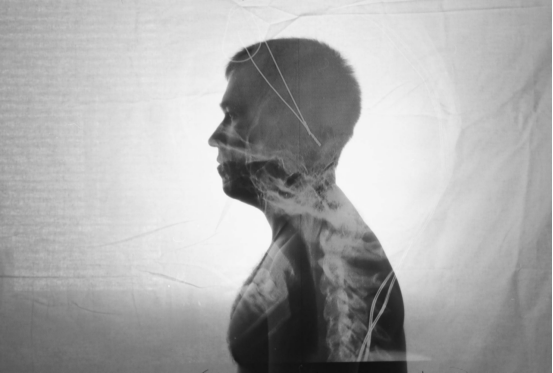
Phrenology and the theory of born criminals were widely disseminated in Europe at the time, benefiting from prevalent racist ideologies. Researchers linked skull morphology to intelligence and personality across different races, even proposing an “evolutionary gap” between Blacks and Whites, arguing that some races were closer to a primitive state. This view not only lacked scientific basis but also disguised aesthetic bias and racial discrimination as “scientific discovery.”
In fact, many of the “criminal facial features” defined by Lombroso and Gall were based on the aesthetic judgments of the time rather than on biological associations with actual criminal behavior. The logic that individuals deemed “ugly” are more likely to be labeled criminal suspects is clearly seriously flawed.
Theoretical limitations and judicial responses
Despite its popularity among the public and some academic circles, the theory of born criminals has not been widely accepted in judicial practice. One reason is that the theory is too broad and can easily be used by defendants as an excuse. For example, some criminals may claim that their criminal behavior is driven by “innate violent genes,” thereby blurring the lines between personal responsibility.
With the development of scientific methods, phrenology and the theory of born criminals have been gradually discredited as pseudoscience. Modern neurology and criminal psychology indicate that criminal behavior is more influenced by social, psychological, and environmental factors than simply genetics or skull morphology. Modern criminological research has found that family environment, education level, social pressure, and neurochemical factors have a more direct impact on criminal behavior. For example, early traumatic experiences and social rejection are often more predictive of adolescent criminal tendencies than genetic factors.
Contemporary Perspective: Cognitive Biases and Pseudoscience Traps
Although phrenology and the theory of born criminals have long been outdated, the human cognitive patterns they reflect are still worth noting. 200 years ago, those who believed that skull shape determined personality had similar thinking patterns to those who believe in horoscopes, conspiracy theories, or quick psychological tests today:
Tend to use simple logic to explain complex phenomena
Seeking certainty and predictability
Avoid deep analysis and embrace uncertainty
This cognitive bias persists today, especially in the rapidly disseminating online environment. Pseudoscience, conspiracy theories, and inflammatory rhetoric often exploit the human need for “simple patterns” to mislead or manipulate the public. Understanding historical phrenology and the theory of born criminal can help us better identify modern information traps and improve our critical thinking skills.
Supplementary historical cases and cultural influences
The theory of born criminals also had a long-lasting impact on society and culture. This trend of thought can be seen in many detective novels and literary works from the late 19th century to the early 20th century. For example, the descriptions of criminals’ appearance and psychology in the detective stories of French author Edgar Allan Poe and the novels of British author Sherlock Holmes were partly influenced by contemporary theories of phrenology and criminal biology. Furthermore, this “appearance determines character” approach also influenced some early police records, leading law enforcement officials to subconsciously bias their case analysis.
Lessons and Reflections
The popularity of born criminal theory and phrenology reveals the risks of intertwining scientific and social biases. They remind us that:
Science must be based on rigorous evidence , not visual impressions or aesthetic judgments.
Cognitive biases can affect decision-making at any time , especially when it comes to evaluating the behavior of others.
Historical cases can serve as cautionary tales , helping us understand how contemporary society can combat pseudoscience and bias in information dissemination.
Comparing the past and present, humans still need to be wary of the misleading effects of simplistic logic and cognitive shortcuts. The complexity of society means that individual behavior cannot be judged solely by appearance or a single characteristic. The scientific spirit demands constant questioning and deep understanding.
Conclusion
The story of born-again criminal theory and phrenology is not only a history of science but also a reflection on human cognition, biases, and societal beliefs. In modern society, where information dissemination and public opinion are increasingly rapid and complex, understanding these historical lessons can help cultivate critical thinking and avoid falling into pseudoscience and cognitive traps. Perhaps we should reflect on which seemingly plausible claims in today’s online landscape are actually repeating cognitive misconceptions from 200 years ago?
https://www.aclerly.com/the-born-criminal-theory-a-historical-analysis-of-phrenology-and-bias/