https://www.aclerly.com/the-architecture-of-perception-how-the-human-brain-constructs-reality/
Decoding the “potential myth” and reconstructing our true understanding of intelligence
Introduction: A long-standing myth
In the discussion of human intelligence and potential, there is a widely circulated saying: we only use 10% of our brain. This view has been repeatedly cited in science fiction movies, motivational speeches and even some “potential development courses”. Many people therefore firmly believe that if we can “unlock” the remaining 90%, we will have a photographic memory, understand complex theories instantly, and even have superpowers.
But the fact is that this statement has never been supported by any authoritative neuroscience research institute. Even Einstein himself, who is often mentioned, has never publicly expressed similar views. So where does this “10% brain theory” come from? Why is it so confusing? And what is the real working mechanism of our brain?
Why the “10% Theory” is a complete rumor
If only 10% is used, how do you explain the energy consumption?
The human brain accounts for only about 2% of body weight, but consumes about 20% of the body’s energy. This ratio is far higher than that of other animals: rodents such as mice consume 5%, canines consume nearly 6%, and chimpanzees consume only about 10%. What’s even more amazing is that the brain energy consumption of infant humans can even be as high as 60% of the body’s energy.
If 90% of the brain is “idle”, such high energy consumption is meaningless. Natural selection will not retain such an “expensive” but “useless” organ structure.
Use it or lose it is a basic biological law
There is a basic principle in biology: use it or lose it . Whether it is an individual or an entire species, if an organ is not used for a long time, it will degenerate or even disappear. For example, the human appendix and tonsils are considered to be “evolutionary remnants” whose functions have gradually weakened in the past.
Assuming that 90% of the brain is chronically inactive, we should have seen a gradual degeneration over thousands of years, but the opposite is true – the size of the human brain has not changed much, while its functions have continued to evolve.
The truth revealed by modern neuroimaging
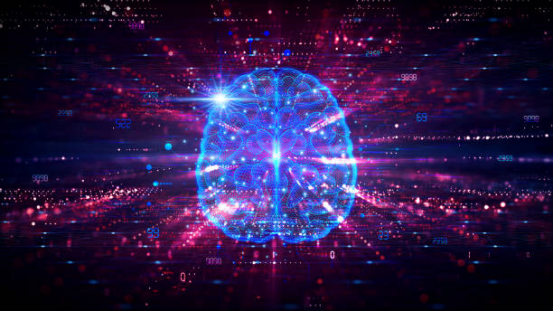
When awake, the brain operates almost without any blind spots
Using modern neuroimaging techniques such as functional magnetic resonance imaging (fMRI), scientists can directly observe the active areas of the brain when performing various tasks. Studies have shown that as long as we are awake, there are almost no “idle areas” in the brain.
Even when you’re resting or meditating with your eyes closed, the so-called “default mode network” continues to operate, responsible for complex tasks such as integrating memories, evaluating your own state, and dealing with unfinished problems.
Damage to any part will have a clear impact
If 90% of the areas are really non-functional, then damage to these areas should not have a significant impact. However, clinical observations have found that damage to any small area of the brain can almost lead to abnormalities in language, memory, movement, emotions, etc. This fact itself refutes the claim that “90% is not used.”
Why don’t our brains all “fire at once”?
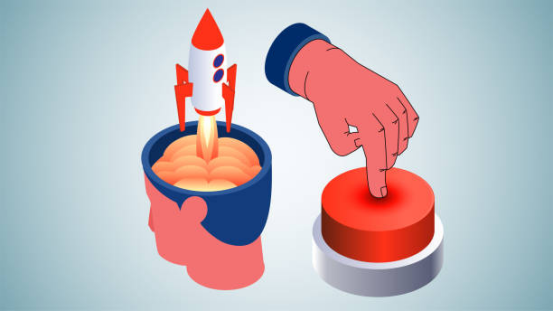
Neural efficiency mechanism: sparse coding principle
Although the brain is being used as a whole, it is not “fully lit” like a light bulb. Instead, it works in a way called sparse coding – that is, only a few key neural pathways are activated at a time to complete the task.
For example, when we see a cat, our brain does not analyze every hair or pattern of the cat, but extracts features such as “whiskers”, “pointed ears” and “three-petal mouth” to make a quick judgment. This “key feature recognition” not only improves efficiency, but also greatly reduces energy consumption.
Even in a state of highly focused thinking, the human brain will only activate about 16% of its neurons at most. It’s not because we “can only use so many”, but because this is the optimal solution .
Risks of activating more zones simultaneously
Activating the brain to a greater extent does not mean being smarter, but may lead to serious problems. Excessive neural activation can cause information interference , energy overload , and even abnormal neural discharges , leading to diseases such as epilepsy.
Therefore, the brain is not “not willing to use” but “smartly saving use”. Parallel processing of multiple threads like modern computers is ideal, but it also poses a great challenge to the brain structure.
If we really want to “fully develop our brain”, we need technology to intervene
Theoretical Possibility: More Neural Activation = Multithreaded Brain?
If we really want to activate a higher proportion of the brain to reach the “superhuman” level as described in some best-selling novels, we must first solve two technical problems:
First, there is the bottleneck of energy supply. Neurons consume a lot of energy to work, and if we want to activate them on a larger scale, we must improve the efficiency of mitochondria. In the future, it may be possible to increase energy supply through nanorobots, brain ATP injections, and other methods.
Second, the problem of network optimization. Neurons are like urban traffic systems. Improper route design will cause “brain traffic jams.” Modern technology may be able to optimize brain paths and reduce cross-information interference through neural interfaces or neuroplasticity interventions.
The cost of a super brain may be much higher than imagined
Even if these obstacles are overcome, the side effects of the brain running in multiple threads like a CPU cannot be ignored. Higher density of neural signals will bring mood swings, cognitive confusion, and even neural breakdown. In other words, the so-called “100% developed” human beings may not be happier.
Although individual potential is limited, humans as a whole are becoming smarter
Although it is difficult for individual IQ to break through the limit in a short period of time, the “collective intelligence” of humans as a group is growing rapidly.
From the agricultural society to the information age, the accumulation of human knowledge and technology has increased exponentially, and each of our expertise has become more and more specialized. Society no longer needs people who “know everything”, but people who are “specialized” and good at cooperation.
You don’t need to master the entire process from car manufacturing to programming. You only need to do a small part that you are good at to play a huge role in the system. This kind of division of labor and cooperation itself is a manifestation of the evolution of human intelligence.
Conclusion: Optimizing efficiency is worse than developing potential
The phrase “we only use 10% of our brains” is certainly attractive, but in reality, our brains have long been operating efficiently. Instead of fantasizing about the day when the “seal is lifted”, it is better to think about how to maximize thinking efficiency, learning speed, and emotional stability within the existing architecture.
Maybe you don’t need to light up all the neurons, but just find a thinking pathway that suits you best. What do you think? If the performance of the human brain can really be enhanced in the future, are you willing to try the “technologically upgraded version” of yourself?
https://www.aclerly.com/the-architecture-of-perception-how-the-human-brain-constructs-reality/