
https://www.aclerly.com/the-architecture-of-perception-how-the-human-brain-constructs-reality/
Introduction: When intuition and probability collide
Have you ever fallen into such a dilemma: seemingly simple choices, but you are unable to judge due to incomplete information? One of the most controversial philosophical experiments in the 21st century, the “Sleeping Beauty Problem”, is such a thought experiment that challenges our common sense and intuition.
It not only involves probability theory and cognitive bias, but also, in a sense, previews how humans face the reality of virtual reality, simulated worlds, and even their own existence. This problem goes far beyond the probability of tossing a coin. It tests how we make rational judgments in a world with asymmetric information.
Experimental setting: When the number of wake-ups is written into the rules
Imagine you have volunteered to participate in a science experiment called “Sleeping Beauty.” On Sunday night, you are put into a deep sleep from which you will not be able to wake up naturally until the end of the experiment.
At the same time, the experimenter will flip a coin:
If Positive: You will wake up once on Monday , and then end the experiment.
If it’s the other way around: You will be woken up once on Monday , then put to sleep again; and woken up again on Tuesday .
Every time you wake up, your memory is completely wiped, and you have no way of knowing whether this is the first time you wake up, or whether it is Monday or Tuesday.
Now, here’s the question: When you wake up and are asked, “What do you think is the probability that the coin is heads?”, how should you answer?
Two answers: 1/2 or 1/3?
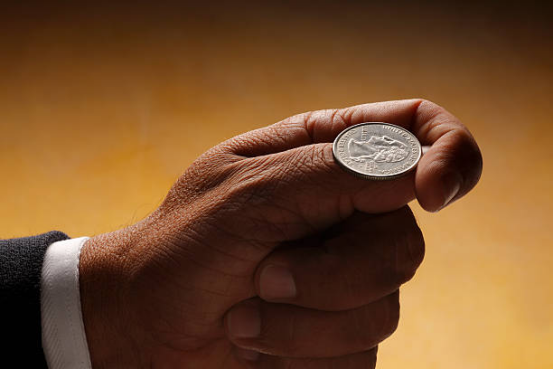
The disagreement in this question lies in how to interpret the condition “you are already awake”.
One view is that the answer is 1/2 . Because the coin toss is completed while you are asleep, it is an independent random event, and no matter how many times you are woken up, it does not affect the probability of heads or tails.
Another view is that the answer should be 1/3 . The reason is that, starting from the fact that “you wake up”, the tail side will give you the possibility of waking up twice , while the front side only once. Therefore, among all the possible situations of being awakened , one-third is caused by the front side and two-thirds is caused by the tail side.
This brings up a key question: Are you calculating the objective probability of the coin landing on heads or tails, or the conditional probability given a certain condition: that you are awake ?
Using data to simulate thinking: How are three hundred experiments distributed?
To understand this paradox more intuitively, let’s assume that you take part in this experiment 200 times .
each of the 100 positive times , for a total of 100 times.
on each of the 100 tails , for a total of 200 wake-ups.
In total, you will wake up 300 times, of which only 100 are due to the “heads” result, and the remaining 200 are due to the “tails”. From these “samples” of wake-ups, the coin is heads only 1/3 of the time .
Understood from this perspective, “1/3” does not deny the fairness of the coin itself, but rather reorders the possibilities under the premise that you “wake up”.
Extreme thought experiment: When the number of wake-ups increases infinitely
To further understand the paradoxical nature of this problem, we can push the setting to an extreme:
If the coin lands on the tails, you are not awakened twice, but countless times – for example, you are awakened every day until the end of your life. In this case, “heads” corresponds to only one awakening, while “tails” corresponds to an infinite number of awakenings.
So, when you wake up one day and are asked about the probability of the coin coming out heads, will you still insist on 1/2? Your intuition begins to waver: after waking up countless times, “heads” has almost become an extremely low probability event.
This also reminds us of a core philosophical proposition: Does the world we observe reflect the true picture, or is it just the result of biased samples? This is very similar to the logic of “survivor bias”.
Analogous reality: Are we also living in “sample bias”?
The “Sleeping Beauty Problem” is essentially a deep questioning of the perspective of observation. It shows that in most cases, humans cannot use the “God’s perspective” to look at events, and can only make judgments based on their limited cognition.
All of this is exactly the same as the thinking bias in our real life:
People who survive in a risky industry tend to overestimate the probability of success.
It is difficult for investors who made money in the technology bubble to realize that they were just lucky to get the timing right.
When we are unable to grasp the full picture and can only infer cause and effect based on the partial situation of “what I am experiencing”, it is easy to draw wrong conclusions.
From “Sleeping Beauty” to “Simulated Universe”: How real is our world ?
This kind of thinking extends to an even more surprising question: How can we be sure that the world is real?
As technology develops, the ability to build virtual reality is gradually becoming a reality. From the “metaverse” to strong AI, we are getting closer and closer to the ability to create a simulated world.
Philosopher Nick Bostrom once proposed the “simulated universe hypothesis”: if humans can simulate a highly realistic virtual world in the future, such a world may be simulated in multiple copies .
Among countless simulated worlds, the real world may be just one of the few “positive” ones. From a probability perspective, the possibility that the world we are currently living in is a simulation may be much higher than we are willing to admit .
So, will we never be able to understand the existence of higher dimensions?
If this world was created by some higher-dimensional being, then this “creator” might have simply set the basic physical rules and let the system evolve on its own – just like we run a sandbox game.
In such a setting, no matter how intelligent humans are, they may be “fixed” in a certain thinking model that they cannot escape. Even if we are able to design strong AI, they cannot fully understand our “feelings”, just as we cannot perceive the world in higher dimensions.
This is not science fiction, it is a logical possibility.
Back to the basics: What Sleeping Beauty teaches us is not mathematics, but humility
The “Sleeping Beauty Paradox” is not only a classic example of probabilistic thinking, but also a mirror that allows us to reflect on our own limitations.
It reminds us:
We rarely have complete information;
Many judgments are based on “limited experience”;
Reason and intuition can conflict, and we often mistake intuition for truth;
When faced with uncertainty, it is more important to develop a sense of probability than to pursue definite conclusions.
In other words, it teaches us how to make “relatively rational” judgments with a “limited perspective.”
Do you really know what day you are in?
From “Sleeping Beauty” to the simulated universe, we are ultimately unable to fully confirm whether our world is unique and real.
But it is precisely because of this uncertainty that we must maintain a “healthy skepticism” about our own cognition and use probabilistic thinking to train our insight into the complex world. This is neither a philosophical topic nor just a mathematical model. It is actually about how we make decisions every day, how we understand cause and effect, and how we accept the unknown.
So, if you are “awake” right now, are you sure that today is really the day of the week?
https://www.aclerly.com/the-architecture-of-perception-how-the-human-brain-constructs-reality/