
https://www.aclerly.com/the-ultimate-guide-to-talent-neuroscience-subconscious-learning-and-deliberate-practice/
What does it really mean to be “gifted”?
Talent always gives people a vague and mysterious feeling. It is invisible and intangible, but almost everyone can feel its existence in life. Especially in certain fields – music, sports, language, art – we always find that some people are “born with it”, as if they are much more relaxed than others when they first come into contact with it.
So, is talent really something you are born with? If you don’t have talent, will all your efforts be in vain? In other words, are talent and hard work “added” or “multiplied”? Let’s take a closer look at this mysterious concept from a scientific perspective.
The subconscious mind is the operating platform of “talent”
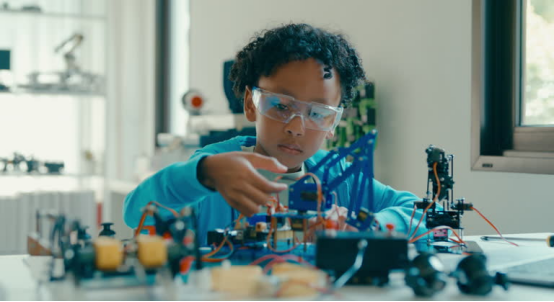
When most of us learn something new, the most intuitive criterion is that some people just learn faster than others . They are coordinated and natural in sports, learn to play musical instruments quickly, and master the intonation and pronunciation of language with extraordinary precision. This performance is not just “smart”, but more accurately, they have a natural sensitivity in this area.
the subconscious system in our brain .
If consciousness is the “stage” for our thinking, judgment and decision-making, then the subconscious is the backstage engineering that supports the entire performance. According to research in psychology and neuroscience, more than 95% of human daily behavior is driven by the subconscious. In contrast, the brain area that consciousness relies on – the prefrontal cortex – is only a small part of the entire neural network, while the subconscious is spread throughout the brain.
This means that a “talented” person is actually better at mobilizing the subconscious system when doing certain things, making the movements faster, smoother, and more thoughtless.
Why are dribbling experts more likely to be considered “gifted”?

Take soccer as an example. Ball sense is often considered an important sign of talent. Dribbling skills, in particular, can demonstrate a person’s precise control of body coordination, timing judgment and spatial perception. The key lies in how naturally the average distance between the ball and the foot is controlled .
Messi is the most classic example of this topic. As one of the best dribblers in history, his dribbling action is almost “one step and one touch”, and the ball never leaves his feet. The reason why he can maintain such a high degree of precision in ball control is not because of “concentration”, but because of muscle memory directly controlled by the subconscious .
This unconscious fluency of movements is the behavioral manifestation of talent.
Myelin: The secret weapon that makes your nerves “react faster”
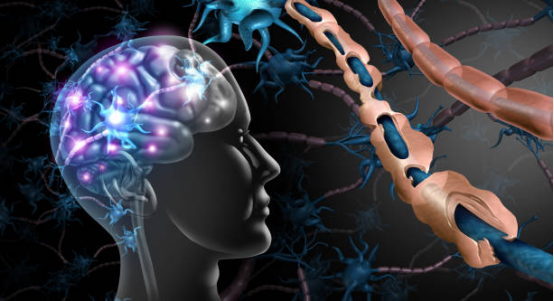
To truly understand talent, we need to introduce a key word in neuroscience: myelin .
Every action, thought, and feeling is achieved through the transmission of electrical signals between neurons. The myelin sheath is the insulating layer wrapped around the outer layer of the neuron “wires”, which can prevent signal leakage and increase the transmission speed.
Importantly, myelinated nerve pathways can conduct signals 100 times faster than unmyelinated ones . In other words, the thicker the myelin sheath, the faster and smoother the nerve response, and the greater the ability to control behavior.
But myelin is not evenly distributed in the brain. Different individuals have different myelin thicknesses in different brain regions. This “local reinforcement” determines each person’s potential talents in different areas: some people have well-developed myelin in the motor cortex and are naturally better at sports; some people have thicker myelin in the auditory center and have an outstanding sense of sound; some people have a strong language center and are able to speak and express themselves easily.
Where does talent come from? Genes and environment work together
What factors affect the thickness of myelin? The first is, of course, genes . The brain structures of different people are not completely the same. Just as some people are born with better eyesight, more pleasant voices, and more coordinated movements, the “hardware configuration” of the brain also varies from person to person.
Another key factor is the nutritional intake during the fetal period . The main components of myelin are phospholipids, cholesterol and protein, so adequate nutritional intake during pregnancy helps the complete development of the nervous system.
However, what really determines whether you can develop a certain ability is not your innate thickness, but the frequency of your acquired use .
How does effort actually shape the brain?
The biggest feature of myelin sheath is that it can be thickened through practice . When you repeat an action or skill, the brain will recognize the “high frequency use” of this neural pathway and continue to thicken its myelin sheath. This is why long-term practice can form “muscle memory”, making tasks that originally required concentration to complete become as natural as breathing.
For example, playing the piano, driving, and typing, once muscle memory is formed, can enter the automatic state, and consciousness can be freed up to handle more complex judgments or creative thinking.
Taking football as an example, a truly high-level player does not “distract himself while dribbling the ball”, but lets his footwork be controlled by his subconscious mind, while his conscious mind focuses on observing his opponent, analyzing the situation, and making judgments. Players with good skills but unrestricted consciousness often fall into the mode of “dribbling the ball without thinking”, resulting in a narrow field of vision and frequent decision-making errors.
So, do talent and hard work add up or multiply each other?
The answer is: addition .
Talent is like an admission ticket, which means that you have a thicker starting myelin sheath in a certain field, which means that you can get started, understand and perceive more easily. But if you want to really achieve results and go further, you must activate this neural pathway through repeated practice and continuously thicken its myelin sheath.
Even if you don’t have a particularly obvious advantage at the beginning, as long as you have the right direction and scientific methods, you can still gradually catch up with those who have innate advantages. The key lies in whether you are willing to “put your efforts in the right place . “
Wrong training may be worse than no training
Effort itself is not always positive. Under the wrong training method, the brain may “reinforce” the wrong muscle memory, causing the myelin sheath of the neural pathway to thicken in the wrong area. Once formed, it is extremely difficult to correct.
This is also why many countries with incomplete youth training systems have difficulty making breakthroughs in the field of sports. A systematically missing training system may cause children to miss the critical window of neurological development during their growth stage, resulting in their ability ceiling being limited early.
This applies not only to football, but also to music, programming, languages and even social skills.
Conclusion: Understand yourself and others
Talent should not be an excuse to restrict efforts, nor should it be regarded as a mysterious superpower. It is more like a kind of physiological condition that “starts early” , which can increase the distance at the starting line, but cannot determine the position of the finish line.
What really widens the gap between people is continuous and correct training, the process of constantly allowing the subconscious to replace the conscious and turning complexity into instinct.
Next time you envy someone who is “born with a knack”, ask yourself: Do I also have unactivated talents in certain areas? Are the efforts I’m making really thickening myelin in the right direction?
https://www.aclerly.com/the-ultimate-guide-to-talent-neuroscience-subconscious-learning-and-deliberate-practice/