
When the room is full of clutter, it is not just about laziness
Almost everyone has come across someone in their life whose home is always filled with stuff, from floor to ceiling, so full that sometimes it’s hard to even find a place to step. It may seem like laziness or slovenliness, but in fact this behavior may not just be a problem of lifestyle, but a psychological disorder called “hoarding disorder.”
Hoarding disorder is not the same as ordinary fetishism or thriftiness. It is a disorder officially listed in the Diagnostic Manual of Mental Disorders. Its core is: the inability to rationally handle the acquisition and disposal of objects . This article will take you to dismantle the psychology, neural mechanisms and social influences behind this behavior, and clarify the origins and development of this modern mentality of “I can live without it, but I can’t live without it”.
Two characteristics of hoarding behavior
In typical hoarding behavior, there are often two complementary tendencies: a strong desire to acquire and an abnormal reluctance to throw away .
The former is particularly evident during consumer festivals, travel shopping, or online flash sales. Regardless of whether the items are practical or necessary, people with hoarding tendencies often cannot control their purchases. Sometimes they don’t even need these things, but they still subconsciously “buy them first.”
The latter is reflected in every corner of daily life – used paper bags, expired skin care products, broken electronic devices, and even childhood notes and toys are carefully preserved. It’s not that they don’t know that these things are “unusable”, but they will fall into an anxiety of “may be used in the future”, making it difficult to make up their minds to discard them.
This “dilemma” turns their home into a concrete projection of their psychological burden.
Endowment Effect: Why is it harder to let go once you have it?
This behavior is not without psychological basis. As early as the 1980s, behavioral economist Richard Thaler proposed a key theory: the endowment effect .
He designed an experiment: a group of students were randomly divided into two groups. One group was given a mug, while the other group was given nothing. Then the two groups were asked to negotiate the buying and selling price. The final result showed that the lowest selling price given by those who already had the mug was much higher than the purchase price that the other group was willing to offer.
This illustrates a simple but profound psychological phenomenon: people will attach higher emotional value and psychological valuation to the items they own . Even items that have just been acquired will be quickly “internalized” as part of the self. Losing it will cause a disproportionate psychological loss.
This mechanism also explains why the “try it out” strategy is so effective in business – when customers already consider the product “part of themselves”, it becomes extremely difficult to return it.
The illusion of security: those things that you don’t need but can’t live without
We may have all heard this sentence: “I can live without it, but I can’t live without it.” This is actually a very typical mild hoarding mentality.
For example, among the people who buy hybrid cars, some people almost only use electric mode in daily driving and rarely need to refuel. But they are still willing to pay extra for the spare engine. Why? Because the mentality of “just in case” is irresistible. Even if that “just in case” never comes, it still brings a sense of psychological security .
For example, in daily life, those clothes that we will never wear, the kitchen supplies that we buy repeatedly, and the electronic accessories that we never use but think “it’s always a good idea to keep” are essentially satisfying a deep-seated anxiety – we are afraid of losing a sense of control, and we are even more afraid that our future selves “will need it but won’t have it”.
When hoarding becomes a disease: The brain’s “overreaction” mechanism
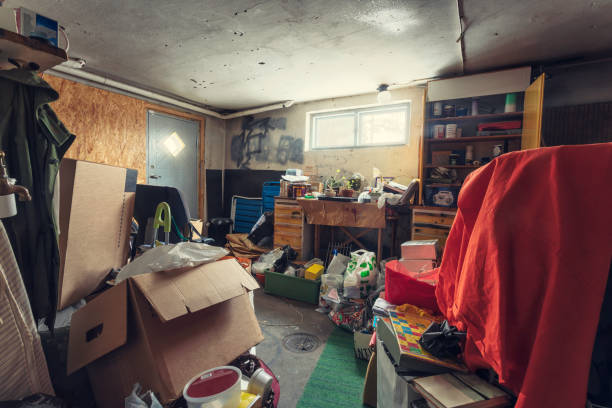
If mild hoarding is a common psychological condition among ordinary people, then hoarding disorder is a mental disorder driven by both psychological trauma and neural mechanisms.
Scientific research has found that when hoarders acquire and discard items, the insula and anterior cingulate cortex in the brain are abnormally active . These two areas are closely related to emotional regulation, decision-making anxiety and self-awareness.
More importantly, this abnormal neural activity often runs in families. However, genes alone do not lead to hoarding disorder, and usually require specific acquired triggers , such as emotional trauma in childhood, major interpersonal losses, or experiencing a period of extreme scarcity of living materials.
For these patients, objects are not just “objects”, they may be substitutes for lost loved ones, compensation for the deprivation of their early years, and the only “order” they can control in a chaotic world.
Who is more likely to be “stuck in clutter”?
Studies have shown that middle-aged and elderly people are at high risk of hoarding . Many people may show mild hoarding tendencies when they are young, but as they age and experience more, this behavior will gradually worsen.
In addition, about 75% of hoarders have other mental health problems, such as anxiety, depression, obsessive-compulsive behavior, and even attention deficit hyperactivity disorder, which further proves that hoarding is not an isolated behavior pattern, but a manifestation of psychological disorder at the material level.
Be kind to those who “can’t bear to throw things away”
We need to re-examine those people who have messy homes and are reluctant to throw things away. It may not be that they don’t know how to organize, but that they bear far stronger psychological fluctuations than ordinary people in every choice between “keeping” and “throwing away”. They are not lazy, but struggling between emotions, memory and the desire for control.
So next time you see someone’s house full of plastic bags, old clothes or empty boxes, try looking at it from a different perspective: they may be using this method to fight against past loss and chaos, trying to build a psychological “refuge” for themselves.
you willing to throw away things you no longer need ?
Every item we are reluctant to let go of has given us some kind of comfort, hope, or a sense of belonging. Learning to organize and discard is not to reject these emotions, but to choose not to rely on them.
Do you have something that you know you won’t use but can’t throw away? Or have you ever felt the sense of security that comes with hoarding at some stage? Please leave a message in the comment section to share your story with “things”. Perhaps, we are all learning not to be owned by our possessions.