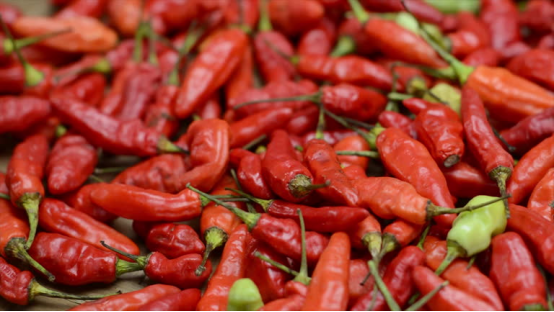
Introduction: Why do chili peppers make people love and feel pain?
In the world of food, few flavors are as polarizing as hot. Some love it, others avoid it. But whether you’re enjoying enchiladas on a Mexican street or challenging ghost pepper sauce at a South Carolina barbecue stand, heat is more than a seasoning—it’s an experience.
Is this fascinating sensory stimulation the result of cultural habits or physiological mechanisms? Why are some people born not afraid of spicy food, while others burst into tears after a bite of spicy food? Understanding this “hot feeling” is actually a complex story spanning genetics, biology and psychology.
Spiciness is not a “flavor” but a pain signal
Spiciness is not a taste, but a “chemical stimulation”.
When you bite into a hot pepper, the nerve endings on your tongue and mouth sense the invasion of capsaicin. This substance activates a protein receptor called TRPV1 , which is designed to detect high temperatures and tissue damage. In other words, when you eat spicy food, your brain actually thinks you are “burned.”
Because of this, spiciness is different from other tastes (such as sweet, salty, and sour) in that it belongs to the category of pain . And people’s sensitivity to spiciness also depends largely on the sensitivity of such receptors – this involves genetic differences.
Are you born with a spicy appetite? Yes, it may really be written in your DNA

The activity of TRPV1 receptors varies from person to person, and this is the biological basis for people being born with a taste for spicy food.
Some people are born with a gene that makes them less sensitive to capsaicin , which makes them feel less intensely the “burning” sensation of chili peppers. Studies have shown that such variations may be related to evolutionary selection at the genetic level in specific populations or individuals.
So, if you are the kind of person who can be calm and composed when eating Thai Tom Yum Goong soup for the first time, it may really be a gift from genes. But if you are not, don’t be too discouraged, because acquired training is the key to changing the sensitivity threshold.
Acquired training: Why can you eat more the more you eat?
You heard it right, the ability to eat spicy food can be “trained”.
The scientific explanation is this: when TRPV1 receptors are exposed to capsaicin for a long time, they will enter a “desensitized” state. This is like wearing headphones for a long time and no longer feeling noisy; or after repeated exercise, the muscle’s tolerance to pain increases.
Many people living in the southern United States, Latin American or Asian communities have been eating spicy food since childhood. Their bodies have completed “adaptive training” early, which makes spicy food no longer “painful” but a daily enjoyment.
Plants’ original intention: Peppers don’t actually want to be eaten by you
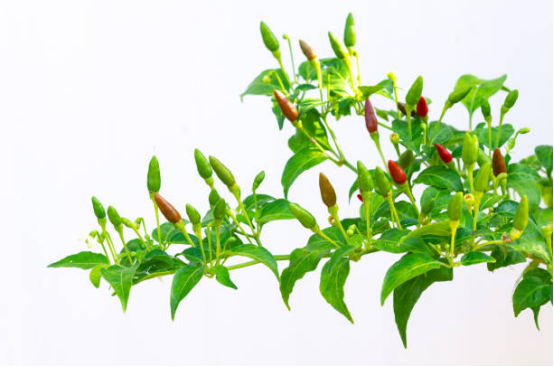
Interestingly, peppers are not made spicy just to please us.
From the perspective of plant evolution, the main purpose of capsaicin is to defend against mammals . Because mammals will crush the seeds when eating peppers, and the destruction of seeds will affect plant reproduction. In contrast, birds do not have TRPV1 receptors and will not crush seeds. Instead, they can help peppers “seed” through feces.
In other words, chili peppers were originally designed to ward off predators like us, but humans have become addicted to the pain.
The more you eat, the better: the brain’s “reward compensation mechanism”
So why do humans like this “burning taste”? The key is that we have a brain structure that can convert pain into pleasure .
dopamine because it feels “pain relief”, bringing pleasure and excitement.
This is a classic ” benign masochism mechanism .” That is, under the premise of safety and control , we actively experience mild discomfort, which can actually give us a sense of satisfaction after the stimulation.
This mechanism is not limited to chili peppers. It also explains why we love watching horror movies, skydiving, and taking extremely cold ice baths. In essence, this is all about people “cheating” their brains and triggering pleasure circuits.
Culture and Climate: Why Can Southerners Generally Eat Spicy Foods?
From a global perspective, there is a clear correlation between the cultural distribution of chili peppers and climate.
Tropical and subtropical regions are more prone to bacterial growth and food spoilage, and the capsaicin in chili peppers has antibacterial and antiseptic properties. At the same time, spicy food can also help the body dissipate heat and cool down by promoting sweating , which is a physiological adaptation to high temperature environments.
That’s why spicy cuisines from Mexico to India to Thailand are rooted in hot and humid regions, and in the United States, some southern regions like Louisiana or Texas have developed highly localized spicy cultures.
Everyone can eat spicy food—just the threshold is different
Ultimately, the ability to eat spicy food is the result of the combined effects of genes, environment, habits and psychology.
Are you naturally insensitive to spicy food? Congratulations, you have a gifted taste buds.
Slightly sensitive? Eat more and slowly adapt, and the future will be promising.
Extremely afraid of spicy food? In fact, you just haven’t trained your brain and haven’t mastered the trick of “spicy pleasure”.
If you are willing to accept the challenge, start with a mildly spicy taste and continue to be exposed to spicy food in moderation, your brain will eventually adapt and begin to perceive “pain” as a new pleasure signal.
Are you ready to challenge the “evolution of spicy taste”?
Chili is not only a condiment, it is also an experience shaped by people’s innate perceptual mechanisms and social culture.
So, why not ask yourself: Is your fear of spicy food really because you “can’t eat it” or because you never give yourself a chance to slowly adapt? Welcome to share your “first experience of eating spicy food” or “chili challenge story” in the comment section. We want to know where your taste adventure journey started.