
https://www.aclerly.com/the-comprehensive-guide-to-human-biological-variation-genetics-traits-and-societal-implications/
Introduction: Questions about height and life expectancy
The saying “tall people have short lives” seems to have been around for a long time in daily life, and is even regarded as an indisputable “fact” by some people. But how much scientific basis does this view have? The human body is complex and changeable, and the length of life is affected by multiple factors. To truly understand the relationship between height and life expectancy, we must not only rely on statistical data, but also examine it from the perspective of physiology, genetics and evolution.
This article will take you through the animal kingdom, human science and popular research, systematically comb through this topic, and explore the hormone mechanisms and cellular secrets behind it. You will see a full picture that is richer and more scientific than rumors.
Height and life span in the animal kingdom: The story of large and small dogs
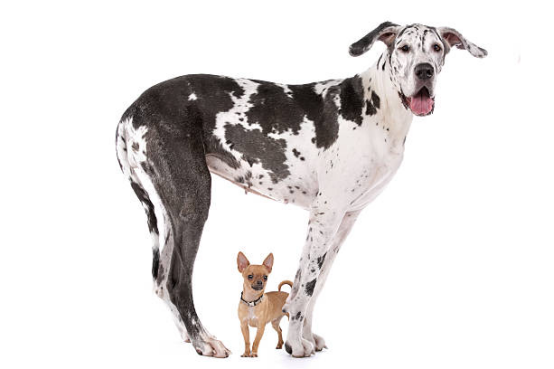
In the animal world, differences in body size often lead to significant differences in lifespan. Take dogs, for example. Dogs come in a wide range of sizes, from miniature Chihuahuas to giant Great Danes, with weight and length varying by dozens of times.
Huge differences in life expectancy
Studies have found that the average lifespan of large dogs is usually only 8 to 12 years, while small dogs can live to 12 to 16 years or even longer. This difference has not only attracted the attention of veterinarians and animal behaviorists, but also become a natural experimental field for scientists to understand the relationship between height and lifespan.
Why is a dog’s lifespan inversely proportional to its size? Part of the reason is rapid growth and metabolic rates. Large dogs grow fast, have a high metabolism, and put a greater strain on their body systems. In contrast, small dogs grow slowly, have a lower metabolism, and are more likely to maintain stable body functions.
Evolution and the impact of human intervention
Dogs originated from wolves that were domesticated tens of thousands of years ago. The lifespan of wolves in captivity is about 15 years, and they grow much slower than dogs, taking at least 2 years to reach adulthood. In contrast, the rapid growth of dogs is clearly the result of selective breeding by humans. By screening for gene mutants, breeds that can reach adulthood faster have been bred to meet the needs of work and companionship.
This “artificially accelerated” growth has the side effect of shortening lifespan, which also reflects the potential association between rapid growth and premature aging. In other words, the shorter lifespan of large dogs is both a physiological burden and a legacy of evolution and artificial selection.
Statistical study on human height and life span

Turning to the human field, scientists are also trying to use data to answer whether “tall people have shorter lives” is true.
Analysis of height and life expectancy of NBA and ABA players
In 2017, a study covering nearly a century of data analyzed the life expectancy of more than 3,000 NBA and ABA professional basketball players between 1920 and 2017. The ABA was a basketball league that existed in the mid-20th century and later merged with the NBA.
The study found that the average life expectancy of players with a height of less than 1.85 meters was about 75 years old when they died, while the average life expectancy of players with a height of more than 2 meters was only 56 years old, showing a clear difference.
Comparison of height and life expectancy of California veterans
Another study of more than 300 deceased veterans in San Diego, California, covering data from 1984 to 1988. The results showed that veterans with a height of more than 1.75 meters had an average life expectancy of nearly 5 years shorter than those under 1.75 meters, and those over 1.82 meters lived 7.45 years less than those under 1.7 meters.
Although these studies cannot completely rule out complex variables such as living environment and occupational risks, they all suggest that height is indeed one of the important factors affecting life expectancy.
Core of Biology: IGF-1 Hormone and Life Rhythm
Understanding the impact of height on life span requires delving into the biochemical world of the body. IGF-1, or insulin-like growth factor 1, is an important bridge between body shape and life span.
Function and mechanism of action of IGF-1
IGF-1 is a hormone-like protein secreted by the liver, which is regulated by growth hormone and is responsible for promoting cell division and metabolism. It accelerates the growth and development of individuals, especially during puberty.
The higher the level of IGF-1 in the body, the faster the growth and the taller the body tends to be. However, this rapid growth is also accompanied by more cell replication, which increases the risk of gene mutation and cancer.
IGF-1 and Cancer Risk
Scientific research shows that high concentrations of IGF-1 are positively correlated with the incidence of various cancers. This is because IGF-1 inhibits the normal apoptosis process of cells, allowing damaged cells to continue to survive and divide, increasing the chance of malignant mutations.
This relationship is particularly evident in large dogs. For example, the IGF-1 levels of large breeds such as Golden Retrievers, German Shepherds, and Labradors are more than twenty times that of small dogs. These breeds also have a higher risk of cancer.
The complex relationship between IGF-1 and cardiovascular disease
Regarding the relationship between height and cardiovascular disease, the results of the study are more complicated. In general, taller people have a lower risk of coronary heart disease and hypertension, but are more likely to develop atrial fibrillation and venous thrombosis.
This duality suggests that the relationship between height and health risks cannot be simply summarized as “tall people are healthier” or “tall people are more vulnerable”, but is the result of the interweaving of multiple dimensions.
Aging and longevity genes: the game between IGF-1 and FOX protein
The speed of aging depends largely on the cell’s ability to repair and renew itself. FOXO transcription factor proteins are a key class of anti-aging proteins that can repair cell damage, eliminate potential cancerous cells, and slow down the aging process.
IGF-1 has an inhibitory effect on FOXO protein, which means that people with high IGF-1 levels have weakened cell repair capabilities and age relatively faster.
Members of long-lived families typically have naturally lower IGF-1 levels, which makes the FOXO protein in their bodies more active, allowing cells to be better repaired and maintained, thereby extending their lifespan.
The influence of height: the result of multiple factors
Although height does have a certain correlation with life expectancy, it is far from a decisive factor. Lifestyle, diet, genetics, environmental pollution, medical conditions, etc. can have a huge impact on life expectancy.
Moreover, the height difference between human individuals is not as great as that between dogs, which makes the impact of height on life expectancy relatively weak in reality.
More importantly, social structure and technological progress are constantly changing our lifestyles, and many health risks can be mitigated or prevented through medical means. Therefore, for ordinary people, it is more important to pay attention to healthy habits than to worry about height.
Conclusion: What do you think about the relationship between height and life expectancy?
The relationship between height and life expectancy is far more complicated than a common saying. Through animal experiments, human big data statistics, and research at the hormone and cell levels, we have gradually uncovered a corner of this mystery.
Do you think height affects life expectancy? Or do you know people who have health problems due to their height? Feel free to share your stories and opinions and explore the mysteries of life together.
After all, our height may not be able to be changed, but our attitude towards health and life is completely in our own hands.
https://www.aclerly.com/the-comprehensive-guide-to-human-biological-variation-genetics-traits-and-societal-implications/