
https://www.aclerly.com/the-architecture-of-perception-how-the-human-brain-constructs-reality/
Introduction: What will the world look like when the perspective is turned upside down?
If you suddenly see the world upside down, how will your brain react? Can you still act normally? This is not science fiction, but a real question that scientists have long explored. How do our visual system and brain work together to “correct” the inverted retinal image to the upright picture we are accustomed to? This process involves the amazing plasticity and sensory integration ability of the brain.
From infant visual development to classic experiments a century ago, to the latest discoveries in modern neuroscience, research has revealed that visual experience is not just passive reception, but the result of active remodeling of the brain. This article will take you to a deeper understanding of the transmission mechanism of visual information, interpret key experiments in history, and how modern science explains the brain’s reconstruction of spatial perception.
Fundamentals of the visual system: Why are images on the retina upside down?
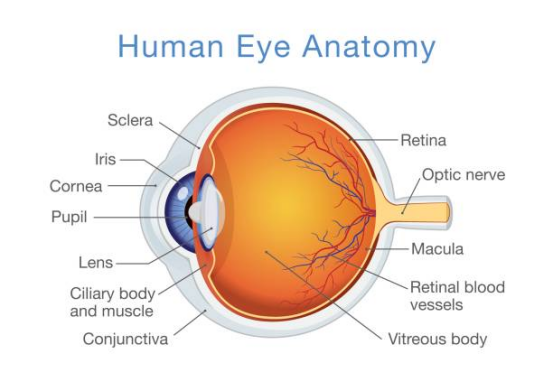
The lens of the human eye functions like a convex lens. Light passes through the lens and is focused and projected onto the retina. However, the physical imaging law determines that the image presented on the retina is upside down. In other words, what the eye “sees” is actually an inverted picture.
This phenomenon is not complicated. It is similar to the principle of imaging when we observe an object through a magnifying glass. After the light passes through the lens, it will be refracted, causing the imaging direction to change. The retina only receives these physical signals and has no ability to “recognize” the image.
So how is the upright world we usually experience formed? The key lies in the visual cortex of the brain. It receives electrical signals from the retina and combines information from other senses of the body, including hearing, smell and especially the vestibular system (responsible for balance and spatial orientation), “flips” the inverted image, and finally forms the upright visual experience we are familiar with.
This shows that vision is not a simple optical imaging, but a complex cognitive process involving multi-sensory coordination and active processing.
Infant visual development and learning
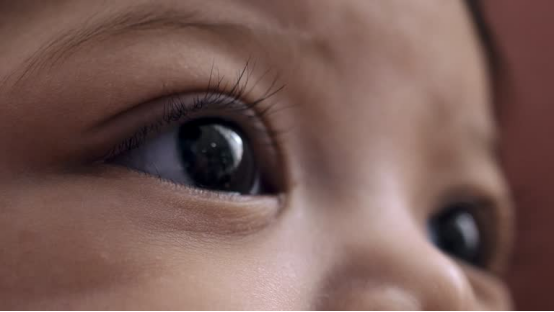
When babies are born, their brains are not yet fully mature in processing visual information, and the world they see may initially be in an “inverted” state. As they continue to observe the environment, move their bodies, and receive multi-sensory stimulation, their brains gradually learn how to “flip” the inverted images, forming a vision that conforms to daily cognition.
If infants are confined to an extremely static environment lacking sensory stimulation, the process of visual adaptation stalls and the inverted visual state may persist for a long time, which emphasizes the key role of sensory stimulation and movement in the visual development of the brain and reflects the early manifestation of neural plasticity.
The inverted glasses experiment: a century-old challenge of visual adaptation
In 1897, American psychologist George Stratton designed a special pair of “inverted glasses” that turned the wearer’s field of vision upside down. This experiment became one of the classic studies of perceptual adaptation in the history of neuroscience.
Stratton had volunteers wear the glasses around the clock to see if the brain could adapt to the inverted visual input and gradually “correct” the upside-down image.
Initial sensory shock and movement disorders
When the volunteers first put on the glasses, they experienced strong visual confusion. Simple daily actions such as walking, writing, and holding a teacup became extremely difficult. Even drawing a straight line could not be completed smoothly, especially horizontal lines. The conflict between vision and other senses caused severe nausea and dizziness.
This dilemma is partly due to the inability of the eyes to stably track moving objects. Whether the object is stationary or the head is moving, the eyes cannot achieve normal visual lock, resulting in serious disorder of spatial perception and difficulty in movement.
The miracle of brain adaptation: sensory integration and spatial reconstruction
Surprisingly, after several days of training and adaptation, the volunteers’ brains began to reshape the way they process visuals, gradually learning to accept inverted images as “normal.”
They could instinctively judge spatial direction and recover skills such as blocking a ball, pouring water, writing and even riding a bicycle. By the seventh day of the experiment, basic life abilities were almost restored. Although the image on the retina was still upside down, the brain had built a new spatial cognition system and successfully flipped the perceived picture.
This discovery shows that the brain has extremely strong plasticity and can reprogram visual and motor neural circuits to adapt to extreme changes in sensory input.
Contemporary research perspective: The dynamic balance between sensory coordination and cognitive plasticity
Since the 20th century, similar visual adaptation experiments have continuously verified the brain’s powerful adjustment ability. Dutch philosopher Jan DH Den Hartog further confirmed through a 30-day visual inversion experiment that visual experience can not only be completely corrected by the brain, but also can switch freely between static and moving states.
Specifically, when the wearer remains still, the vision returns to the inverted state; once the wearer starts to move, the brain can correct the vision in real time with the help of the vestibular system and body touch, returning to normal perception. This phenomenon reveals the close coordination mechanism between sensory inputs.
The Importance of Multisensory Integration
This study emphasizes that visual perception is not produced in isolation, but relies on the coordination of multiple sensory systems in the body. The vestibular system provides spatial balance information, tactile feedback assists positioning, and hearing and smell supplement environmental clues. The brain integrates these signals to build stable spatial cognition.
It is this multisensory integration that ensures that we can maintain reasonable perception and ability to act in the world even in the face of abnormal sensory input.
Philosophical Thinking on Visual Adaptation and Reality
Such experiments not only demonstrate the physiological adaptability of the brain, but also trigger profound thinking about the relationship between “reality” and “perception”.
Our sensory experience is essentially the brain’s interpretation and reconstruction of external stimuli. The “appearance” of reality is not physically objective and fixed, but a cognitive construction generated dynamically by the brain. This means that there are multiple possibilities for our “reality”, depending on the integration of sensory input and the way the brain processes it.
Survival takes precedence over objective reality
Evolution tells us that survival takes precedence over absolute truth. The brain adapts to ensure that we can effectively cope with the environment, even if it means “distorting” or “rewriting” sensory information such as vision and hearing.
This ability allows us to maintain function and quality of life in the face of a variety of perceptual abnormalities, reflecting the flexibility and power of the brain as a cognitive center.
Technology Frontier: Sensory Enhancement and Visual Reshaping in the Future
With the advancement of neuroscience and technology, it may be possible to further expand the limits of the brain’s sensory adaptation through technological means in the future.
Emerging fields such as nanotechnology and brain-computer interfaces are expected to improve the efficiency and capacity of the brain in processing information by enhancing neuronal energy metabolism and optimizing neural network structure. Perhaps one day, we will be able to switch between different perception modes and even achieve simultaneous processing of multiple tasks.
However, these potentials are accompanied by huge challenges and risks, such as energy consumption management and neural signal interference, which still require long-term scientific research and ethical review.
The future trend of collective intelligence and individual cognition
Although the intelligence of an individual brain can only be improved to a limited extent, the overall IQ and knowledge level of the human group is constantly improving. Information sharing and specialization make it possible for everyone to contribute to society by being proficient in a certain field instead of having to master all knowledge.
This division of labor, cooperation and progress in information exchange has promoted the rapid development of science and technology and culture, and has also changed our traditional understanding of “wisdom”.
Conclusion: If your vision is turned upside down, can your brain keep up?
The visual inversion experiment reveals the amazing adaptability of the brain and the sensory integration mechanism, challenging our inherent cognition of “reality” and “perception”. In the future, with the development of science and technology, the boundaries of sensory experience will be continuously expanded.
So, have you ever thought: If your visual world is suddenly turned upside down, how long will it take you to adapt? How much “change” in perception can your brain withstand? Feel free to share your thoughts in the comments section, and let’s explore the mysteries of the brain and perception together.
https://www.aclerly.com/the-architecture-of-perception-how-the-human-brain-constructs-reality/